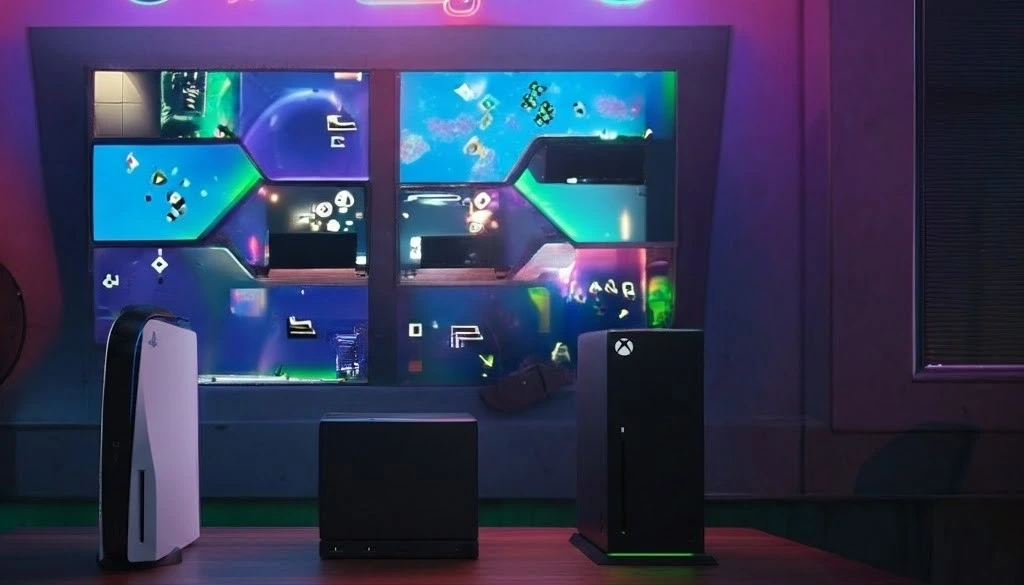
Valve’s attempt to bring PC gaming to the living room with the original Steam Machines was, ultimately, a premature concept. However, the subsequent, massive success of the Steam Deck has demonstrated that the market is ready for a dedicated, console-like PC experience.
This shift in momentum has led to intense speculation about Valve’s next hardware move. Could the company revive the Steam Machine concept with modern, performance-focused specifications? This analysis dives into the rumored specifications of a potential new Steam Machine and pits them directly against the established heavyweights: the PlayStation 5 and the Xbox Series X.
The central question remains: in the era of powerful next-gen consoles, can a dedicated, desktop-class Linux gaming box still compete on specs, price, and performance?
The Core Hardware Showdown: Specs Comparison
The power of any modern gaming device is determined by three key factors: the CPU, the GPU, and the memory/storage configuration. Here is a side-by-side comparison of the hypothetical Steam Machine against its primary console competition:
| Component | Hypothetical Modern Steam Machine | PlayStation 5 | Xbox Series X |
|---|---|---|---|
| CPU Architecture | Custom AMD Zen 4 (6 Cores, 12 Threads) | Custom AMD Zen 2 (8 Cores, 16 Threads) @ 3.5GHz | Custom AMD Zen 2 (8 Cores, 16 Threads) @ 3.8 GHz |
| GPU Architecture | AMD RDNA 3 (28 Compute Units) | AMD RDNA 2 (36 Compute Units) | Custom AMD RDNA 2 (52 CUs) @ 1.825 GHz |
| System RAM | 16GB DDR5 (CPU) | 16GB GDDR6 (Unified) | 16GB GDDR6 (Unified) |
| VRAM (Dedicated) | 8GB GDDR6 (GPU) | Unified System RAM | Unified System RAM |
| Storage | 512GB or 2TB NVMe SSD | 825GB Custom NVMe SSD | 1TB or 2TB Custom NVMe SSD |
Analyzing Performance: SteamOS vs. Console Optimization
While raw numbers tell one story, architectural differences and operating system efficiency paint a more complete picture. The hypothetical Steam Machine is clearly aiming for a powerful, mid-range PC experience, rather than a total performance crown.
CPU Advantage: Zen 4 Architecture
The Steam Machine benefits significantly from the AMD Zen 4 architecture. This newer design offers superior Instructions Per Cycle (IPC) compared to the Zen 2 used in both the PS5 and Xbox Series X.
- The newer CPU means better single-thread performance, which is vital for game physics, AI, and overall operating system responsiveness.
- Despite having fewer cores (6 vs. 8), the Zen 4 machine could potentially outperform the consoles in CPU-bottlenecked scenarios, especially when running the lightweight SteamOS (Linux).
GPU Power and VRAM Configuration
In raw Compute Units (CUs), the consoles hold the upper hand, particularly the Xbox Series X with its 52 CUs. However, the Steam Machine’s GPU utilizes the newer RDNA 3 architecture.
- RDNA 3 includes dedicated AI acceleration and features that improve efficiency and ray tracing performance compared to RDNA 2.
- VRAM Separation: The Steam Machine utilizes a split memory approach (DDR5 for CPU, GDDR6 for GPU), which is standard for a traditional PC. This is contrasted with the consoles’ unified GDDR6 memory pool. The 8GB dedicated VRAM would be ample for high-resolution textures in most modern titles.
In summary, the Steam Machine attempts to trade a higher CU count for greater architectural efficiency, positioning it as a highly capable 4K/60fps device, although perhaps falling short of the peak 120fps capability of the Series X in graphically intense titles.
The Handheld Ecosystem: Steam Deck vs. Nintendo Switch 2
Valve’s strategy is now heavily focused on portable gaming, making the comparison between its current flagship and the expected competitor essential.
The Steam Deck (OLED) is compared here against the rumored specifications of the Nintendo Switch 2, demonstrating Valve’s two-pronged approach to the gaming market.
| Feature | Steam Deck (OLED Model) | Nintendo Switch 2 |
|---|---|---|
| CPU | Custom AMD Zen 2 (4 Cores, 8 Threads) | Custom NVIDIA T239 (8x ARM Cortex A78C) |
| GPU | 8 RDNA 2 CUs, 1.6GHz | NVIDIA Ampere |
| RAM | 16GB LPDDR5 (Unified) | 12GB LPDDR5X (Unified) |
| Storage | 512GB or 1TB NVMe SSD | 256 GB |
Handheld Performance Differences
The Switch 2 is rumored to leverage a more efficient NVIDIA processor designed for modern mobile gaming, potentially giving it an edge in GPU performance. However, the Steam Deck offers significantly more unified RAM, which helps with modern resource-intensive titles and multitasking within SteamOS.
Ultimately, the choice between the two portable devices comes down to the ecosystem:
- The Steam Deck is the premier platform for accessing and playing the vast PC gaming library on the go.
- The Nintendo Switch 2 will focus on delivering a simple, plug-and-play console experience with proprietary, exclusive titles.
Conclusion: The Value of Living Room PC Gaming
If Valve were to release a dedicated Steam Machine with these specifications, it would not necessarily be the most powerful device on the market, but it would be the most flexible.
The proposed Steam Machine offers a compelling combination of PC-level flexibility with console-like simplicity. Its value proposition rests on three key pillars:
- Future-Proofed Architecture: Zen 4 and RDNA 3 give it an architectural edge in efficiency and feature support (like advanced ray tracing and AI upscaling).
- The Steam Library: Access to thousands of games, often at much lower prices than on proprietary console stores.
- SteamOS/Linux: An open, customizable operating system that benefits from continuous performance improvements driven by the Linux gaming community.
The hypothetical Steam Machine is a statement that PC gaming no longer requires a bulky tower. It represents the ultimate mid-range, flexible living-room PC that sits perfectly alongside the PS5 and Xbox Series X, offering a different, but equally powerful, route to high-fidelity gaming.
Explore the Latest World of Technology.
Android
cross-device
file-explorer
phone-link
photos-tab
tech-news
windows-android
automation
bash-scripting
command-line
cron-jobs
file-permissions
linux-skills
terminal
vim
android-2026
android-security
apk-install
developer-verification
experienced-user
foss
google-play
open-source
sideloading
appimage